
Pigeon Baskets Maker
Marrakech, Morocco
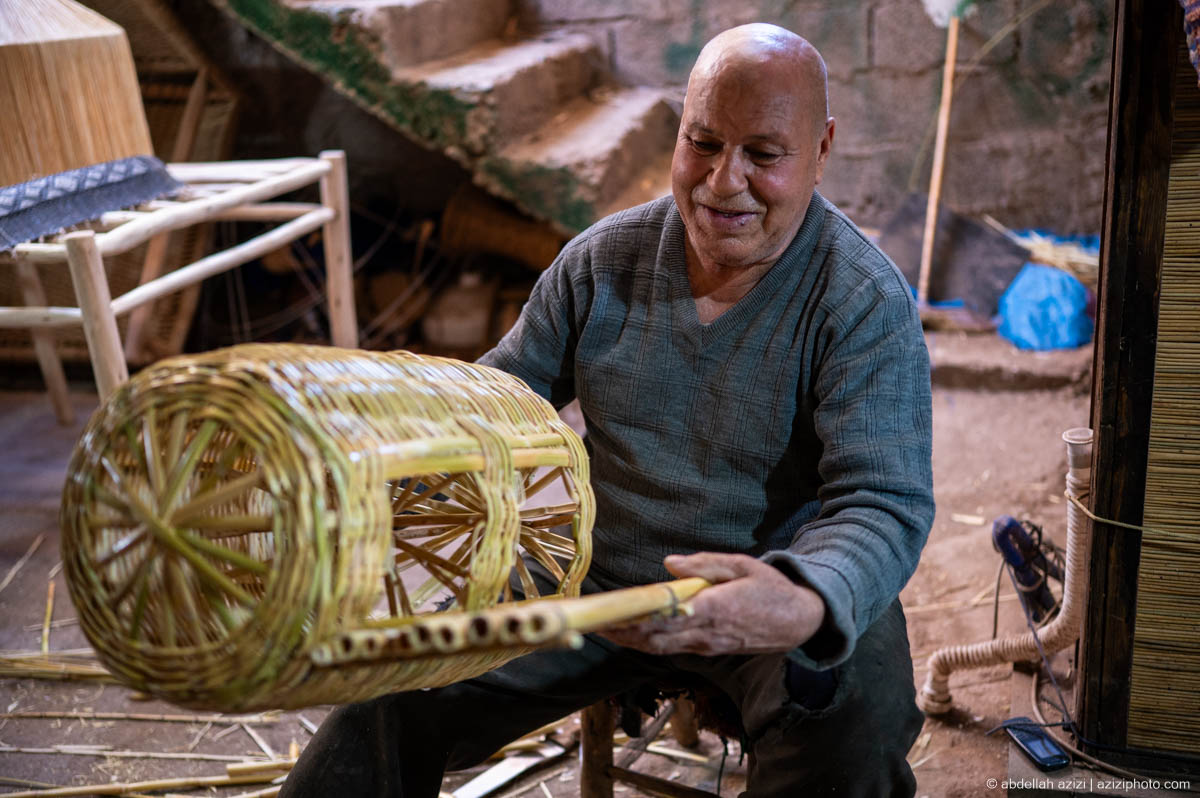
In the heart of Morocco, amidst the bustling souks and ancient tanneries, a quiet tradition is slowly fading away. For generations, skilled artisans have crafted intricate pigeon baskets, a unique form of basketry once essential to the city’s pigeon breeding culture. These “corbeilles à pigeons,” woven from reed tubes, were perfectly adapted to the biology of pigeons, providing a safe and comfortable home for the birds.
The Craftsmanship
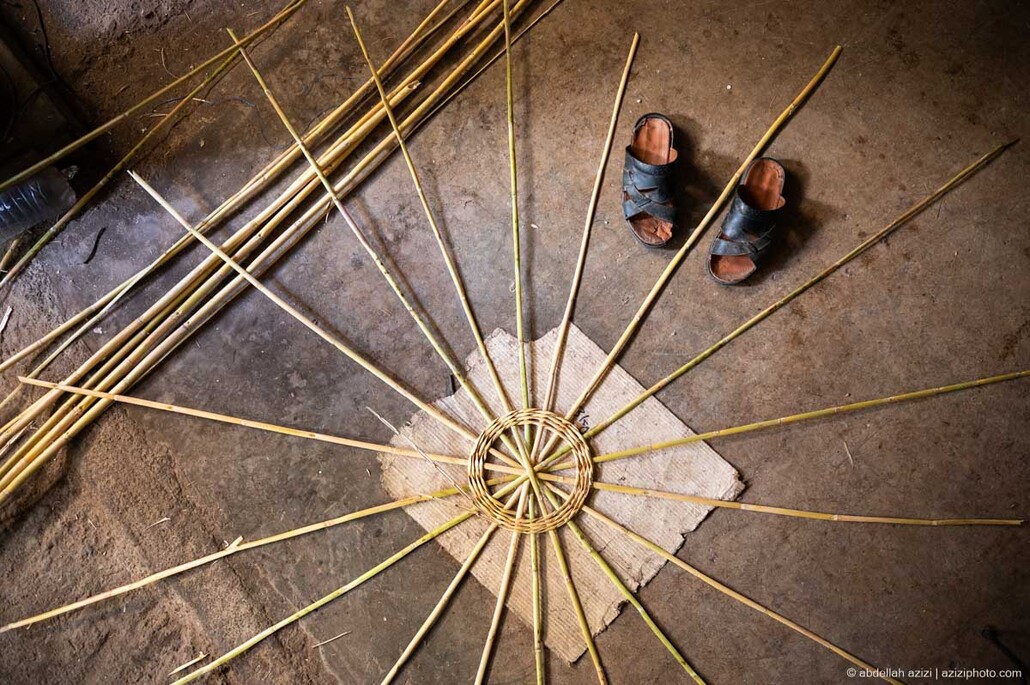
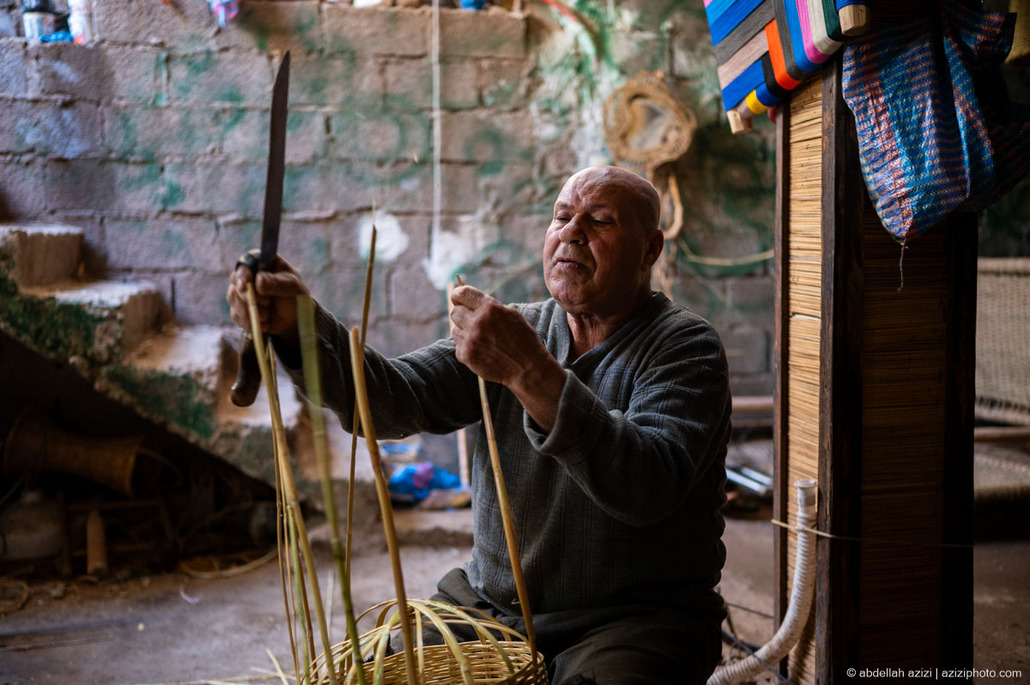
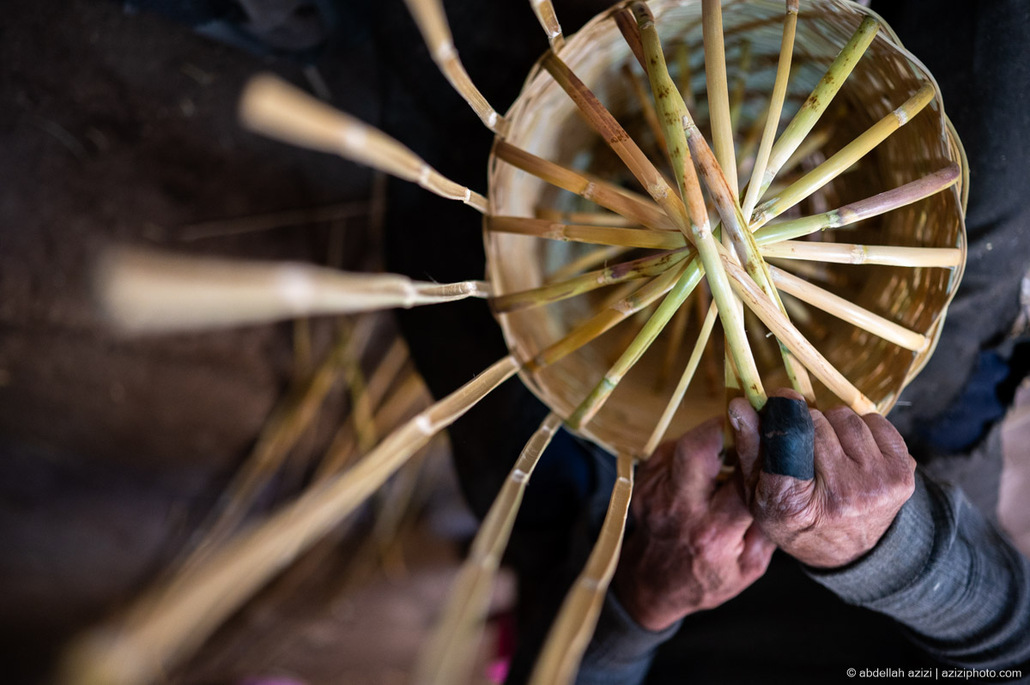
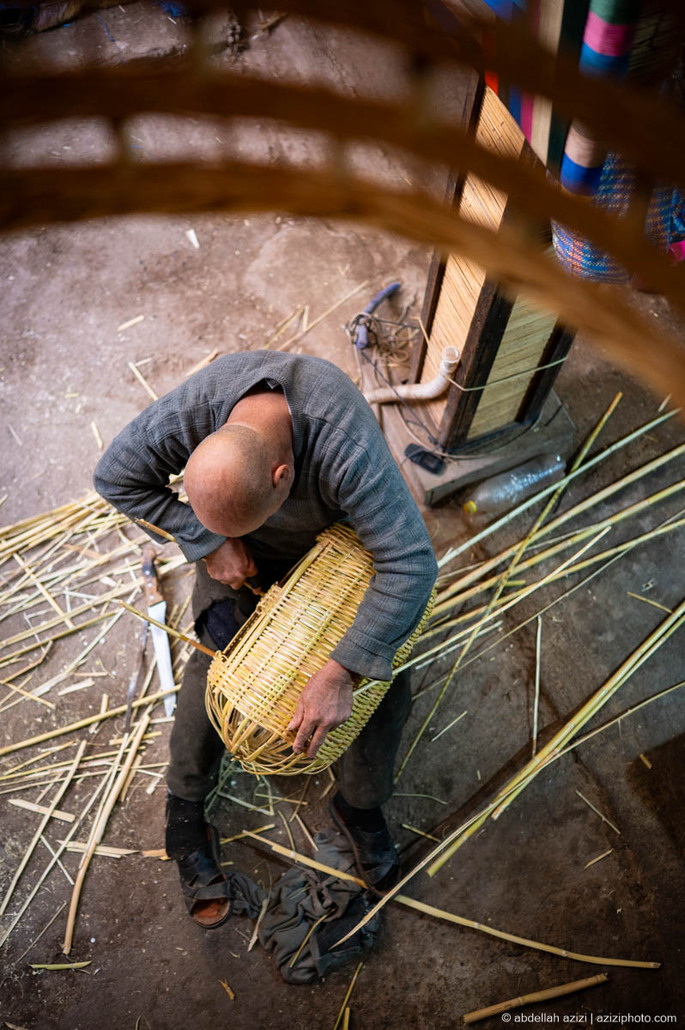
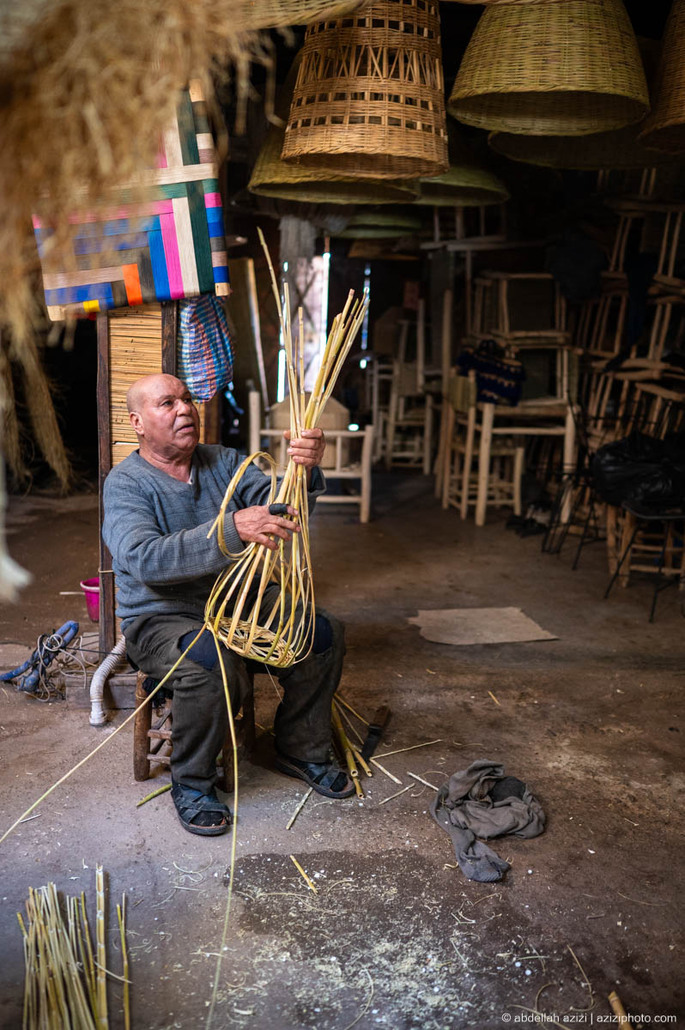
The process begins with a foundation of carefully selected reed tubes, laid out in a radial pattern on a woven mat. The artisan, often seated on a low stool, uses his feet to hold the base in place, a testament to the physicality and skill involved. With practiced hands, he begins to weave, interlocking the reeds to form the sturdy base and walls of the basket. The work is meticulous, each reed carefully placed and tightened to create a strong, durable structure.
A Basket for the Birds
Unlike typical baskets, these pigeon baskets are specifically designed with the birds in mind. They feature a unique, often elongated shape, with a small opening for the pigeons to enter and exit. The natural reed material provides insulation and ventilation, creating an ideal environment for breeding. The baskets were once a common sight in the city’s tanneries, where pigeons were kept for their droppings, which were used in the leather tanning process.
A Fading Tradition
Today, the use of these traditional pigeon baskets has largely been replaced by modern alternatives. As a result, the number of artisans who possess the knowledge and skill to create them has dwindled. The craft is no longer passed down as regularly, and the intricate weaving techniques are at risk of being lost forever.
Preserving the Heritage
Yet, there are still a few masters who continue to practice this beautiful art. In their small workshops, surrounded by the fruits of their labor, they keep the tradition alive. Each basket they create is not just a container; it’s a piece of history, a link to a time when craftsmanship and nature worked in harmony.
By sharing their story, we hope to shine a light on this dying art and celebrate the skill and dedication of these Moroccan artisans. Their work is a reminder that some of the most beautiful and useful objects are born from the simplest of materials and the most patient of hands.